 Marketing Is Listening · Part 6 of 8
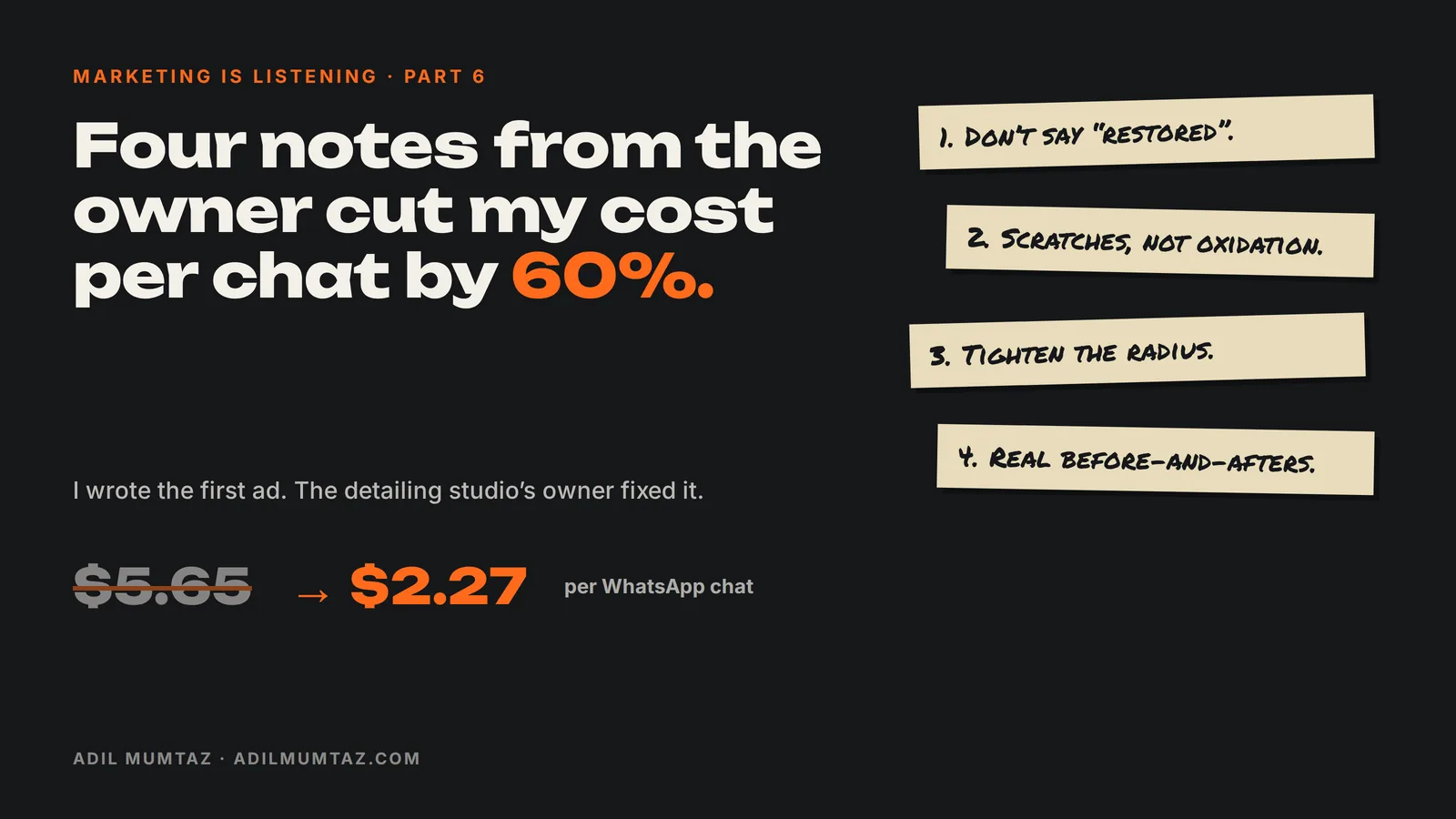
On 1 May 2026 my first ad for a car detailing studio in Ontario went live. I had done the research: 16 competitors mapped in the Meta Ad Library, a clear angle, a clean design. I was proud of it.
The owner wasn’t. He sent me four notes.
Don’t say “restored”. Say scratches, not oxidation. Tighten the radius. Use real before-and-after photos. The owner’s four notes, in short.
What I had missed
Every note was about words or proof, and every one was something only the owner could know.
“Restored” belonged to someone else. In his market, it was a franchise’s word. Using it put his studio in someone else’s clothes.
People don’t have oxidation. They have scratches. I had written in the industry’s language. His customers describe what they see: scratches, swirl marks, scuffs.
The radius was too wide. I had drawn 33 km around the studio. He knew how far people actually drive for a detail. It came down to 25 km.
Real photos beat good-looking ones. A car owner wants to see a car like theirs, fixed. A polished render shows nothing they can believe.
What happened when I listened
His words went into the next ad, three days later. “Restored” became “refinishing”. Oxidation became scratches, swirl marks and scuffs. And the ask changed: send a photo, and we’ll tell you honestly what your car needs.
Here’s the part that surprised me. My original ad had the better click rate: 2.20% against 1.71%. If I’d judged by clicks, I’d have kept my version. But more of the owner’s clicks turned into conversations, because his words spoke to people who actually had the problem.
The other two notes, the tighter radius and the real photos, followed. A month later, the owner sent the line every marketer wants:
The leads I’m getting are better.
The studio’s owner, 3 June 2026
Listening is a skill, not a courtesy
The client knows their buyers’ words. The sales team knows their buyers’ doubts. The ad account knows neither.
At Tameer, the sales team told me what made buyers leave: the price. That became the script in Part 3. With the blinds client, I heard that 30–40% of the chats were spam, and that became the four questions in the first WhatsApp reply in Part 4. Every useful change I’ve made started with someone telling me something I didn’t want to hear.
My job isn’t to know the buyer better than the owner does. It’s to hear the owner before the ad goes live.
How I listen now
- Before the first ad, I ask the owner: what words do your customers use when they call?
- After the first week, I ask sales: which chats were real, and why?
- I read the chats myself. Not all of them, but enough to hear the questions people keep asking.
- When a client’s note contradicts my data, I test the note. Sometimes the data wins. Often the client does.
What listening doesn’t fix
Not every note is right. Some clients ask for bigger logos or louder discounts, and testing those is how you find out. Listening means taking the note seriously, not obeying it blindly.
Part 7 is about subtraction: how cutting a UAE expansion plan from six markets to two made it stronger.
When did a client last change your mind?
If you run ads for clients, I’d like to hear it. If you’re a business owner with notes on your ads, send them to me.
Questions people ask
How should agencies use client feedback on ads?
Treat it as data about the buyer. Owners know the words their customers use and the terms that belong to competitors. Put those words into the next ad and test it; here, it cut cost per chat by about 60%.
Why did the ad with the lower click rate win?
Because more of its clicks came from people with the problem. My ad had a 2.20% click rate but only 27% of clicks became chats; the owner’s version had 1.71% and 45%. For a messaging ad, judge clicks by what they turn into.
What words should local service ads use?
The words customers use when they call, not the industry’s terms. Car owners say scratches and swirl marks, not oxidation. Ask the owner, read the chats, and write it the way people say it.
I’m Adil Mumtaz, a creative strategist for paid social. I find the question under the ad, then I make the ad. My case studies, with the real ads and numbers, are here.