 Marketing Is Psychology · Part 2 of 8
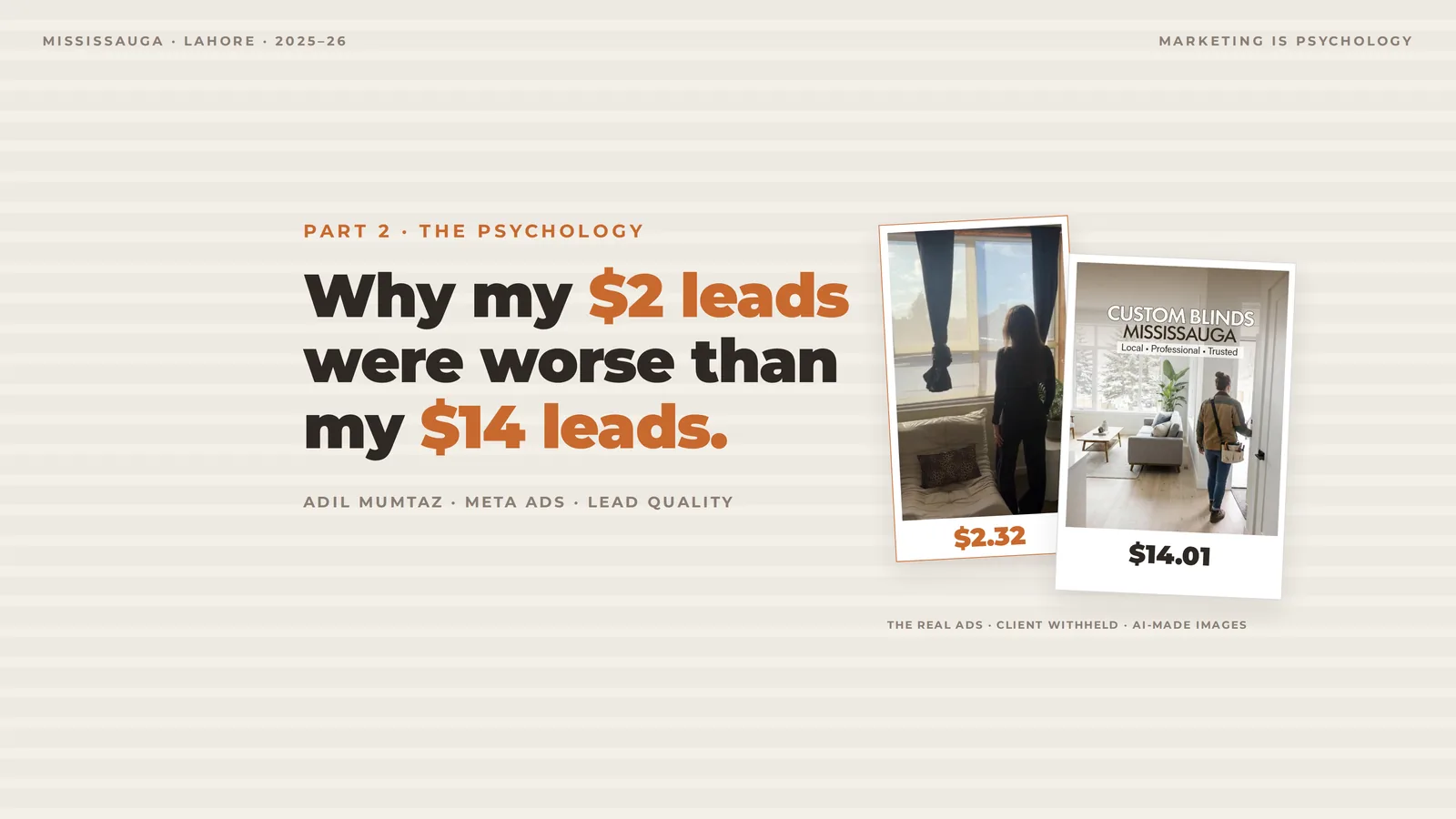
In March 2026 I was running Meta ads for a blinds company in Mississauga, through a US agency. The account had settled at about $13 per WhatsApp chat.
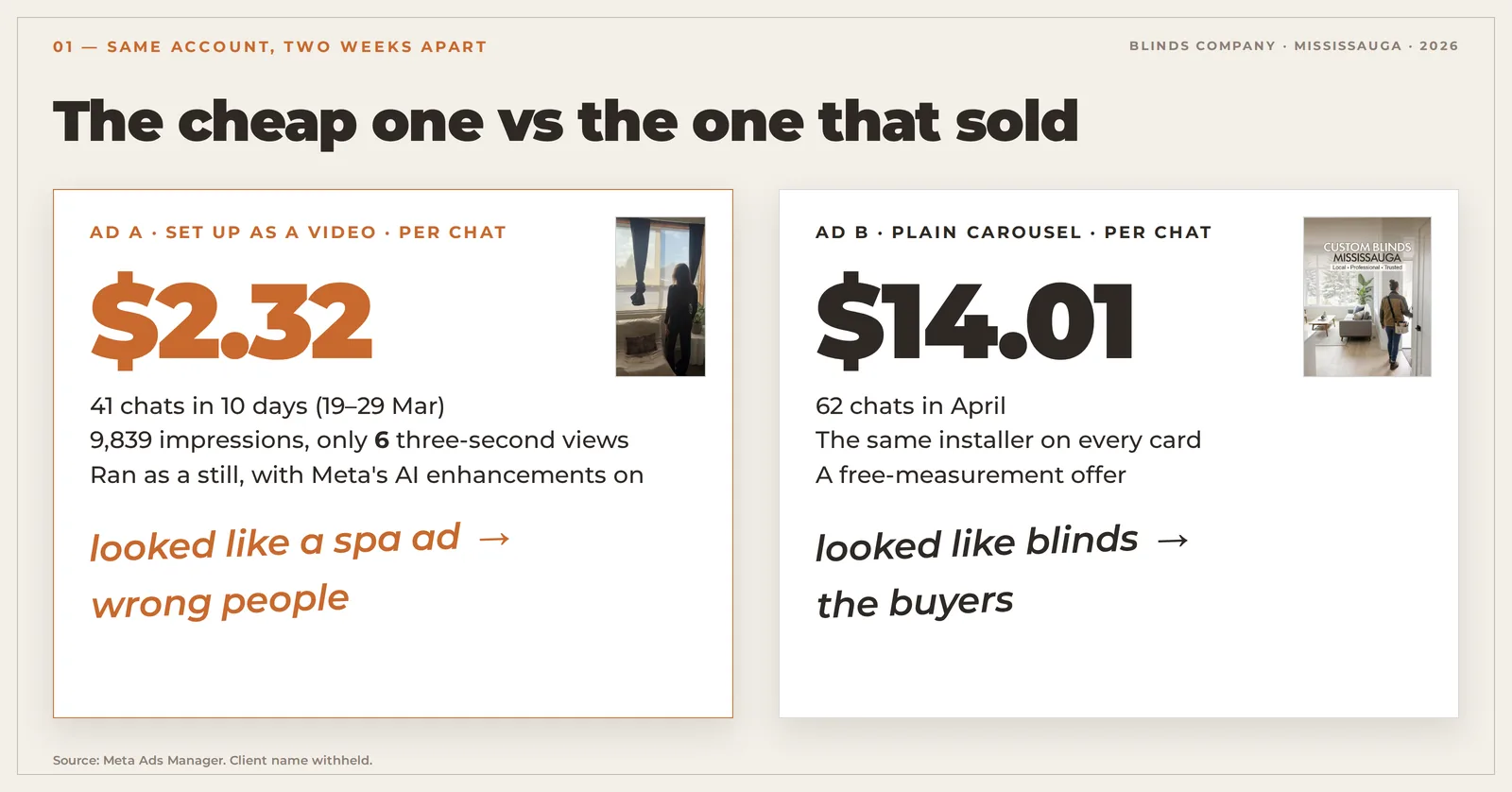
Then one ad started bringing chats at $2.32. Forty-one of them in ten days.
It looked like the best result in the account. Then I opened the ad.
The ad nobody meant to make
The ad was set up as a video. Ads Manager showed 9,839 impressions and only 6 three-second views. Nobody was watching a video, because it wasn’t running as one. It ran as a still image.
Meta’s automatic creative enhancements were also switched on: image templates, touch-ups, animation, text changes. What people saw was a woman in black at a window, with knotted curtains and a leopard-print cushion.
It looked more like a spa ad than a blinds ad. So the people who tapped were looking for something else. The chats were cheap because they were the wrong people.
The plain carousel, with the same installer on every card and a free-measurement offer, cost $14.01 a chat in April. It brought 62 chats, and it brought the buyers.
It wasn’t a one-off
I had seen this before, at Tameer Associates in Lahore.
Price was the sales team’s biggest objection, so we made a series of videos about it. That series brought 508 of our 1,165 inquiries, and some of the cheapest chats in the account.
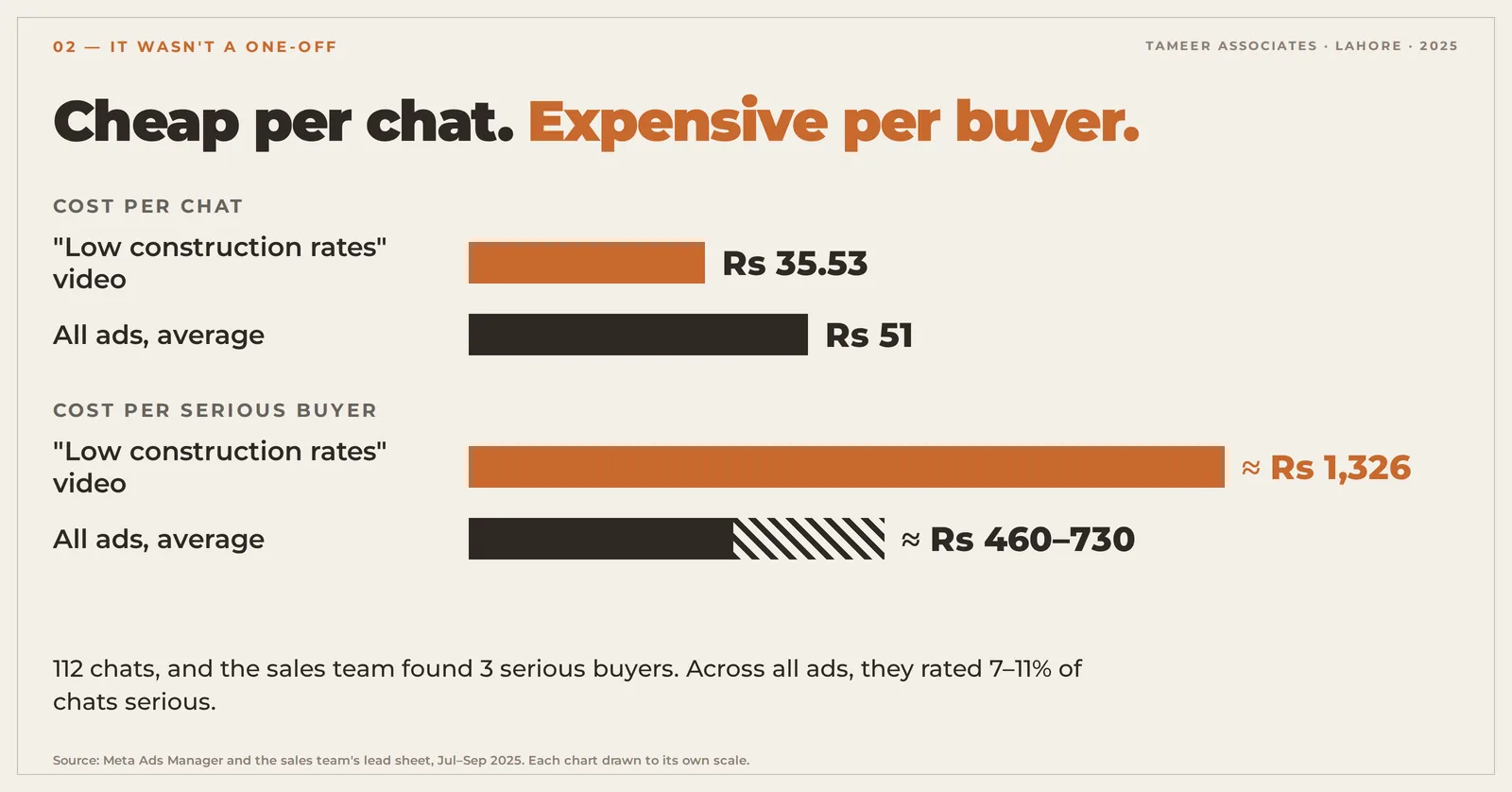
One “low construction rates” video brought 112 chats at Rs 35.53 each. The sales team went through them and found 3 serious buyers.
So that video didn’t cost Rs 35 a lead. It cost about Rs 1,300 per serious buyer. Across all our ads, the sales team rated 7–11% of chats as serious, which puts a typical serious buyer at roughly Rs 460 to Rs 730. The “cheap” video was two to three times more expensive where it mattered.
Why cheap attracts the wrong people
This is where the psychology comes in. Three forces were working against me, and none of them shows up in the cost-per-result column.
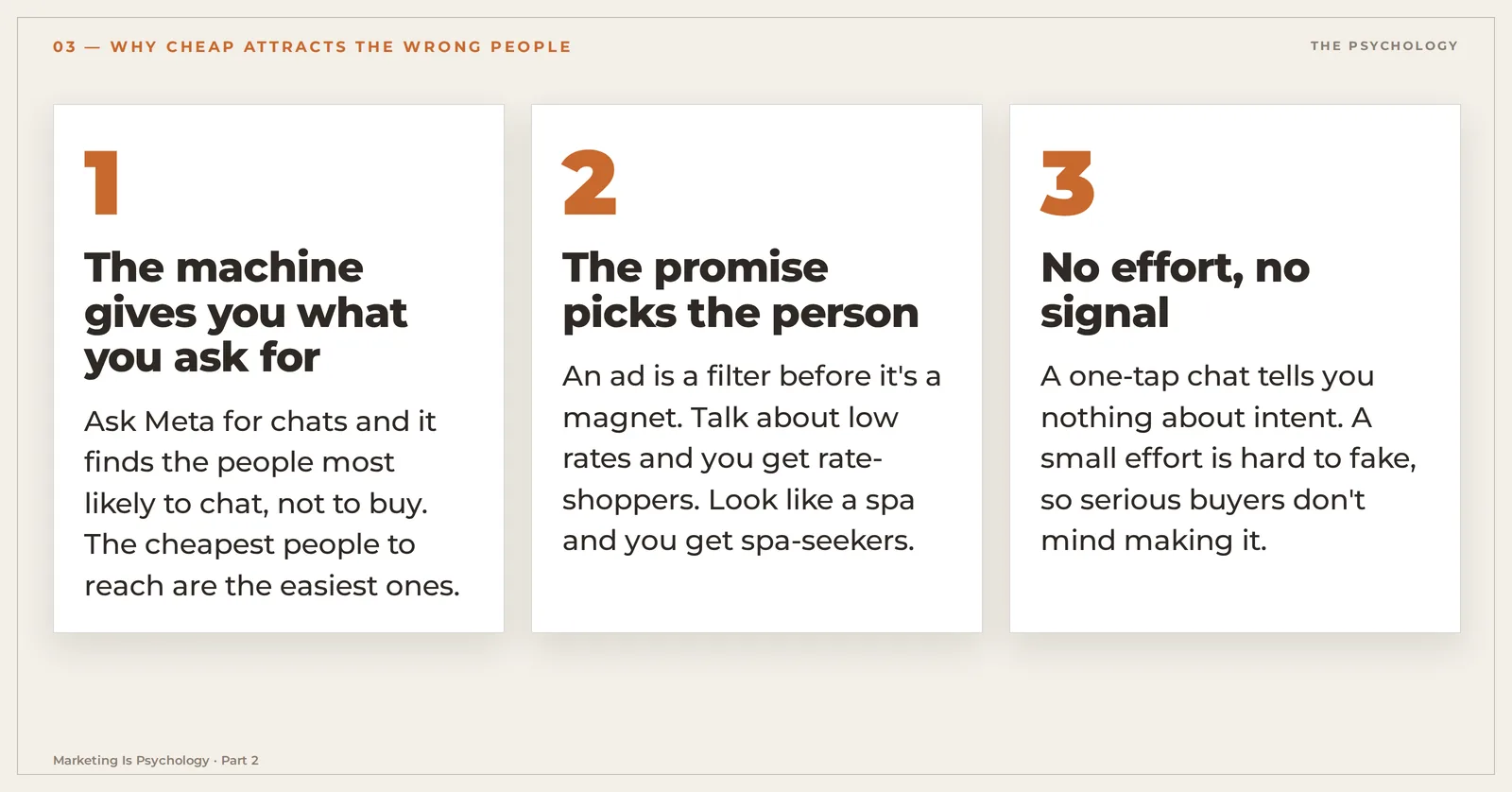
1. The machine gives you exactly what you ask for. I told Meta to find conversations. So it found the people most likely to start one, not the people most likely to buy blinds. The cheapest people to reach are the easiest people to reach. Economists call this Goodhart’s law: when a measure becomes a target, it stops being a good measure.
2. The promise picks the person. Every ad is a filter before it’s a magnet. Talk about low rates, and you attract people shopping for low rates. Look like a spa, and you attract people looking for a spa. The people who reply are the people your ad spoke to.
Every ad is a filter before it’s a magnet.
3. No effort, no signal. A chat that takes one tap tells you nothing about intent. Biologists call this costly signalling: a signal that takes effort is hard to fake. A serious buyer will happily do one small thing to prove it.
What I changed, and what I’d change next
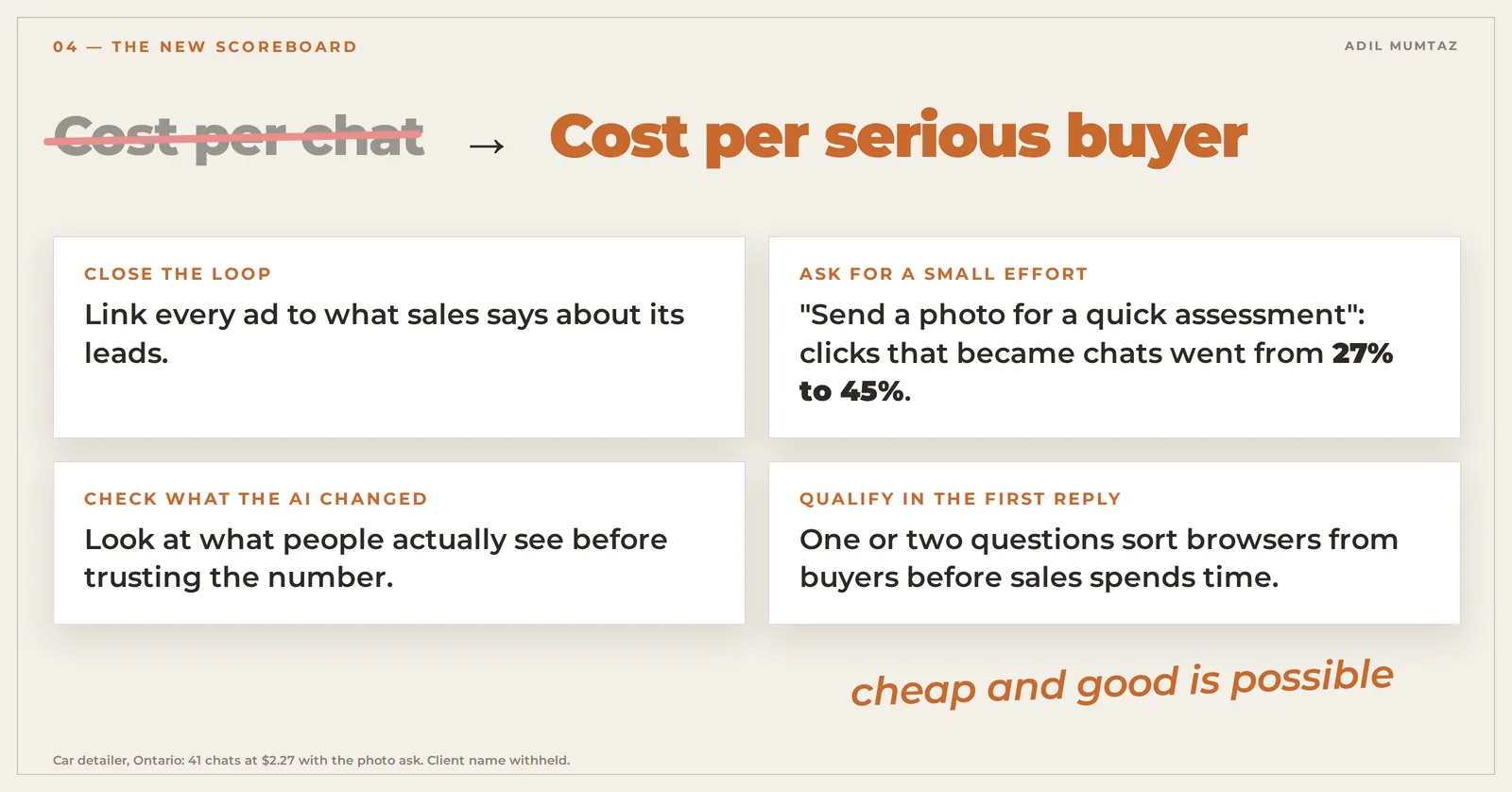
Score ads on serious buyers, not chats. At Tameer I built a sheet with the sales team that linked every ad to the quality of its leads. Without it, I would have scaled the wrong video.
Make the ask a little harder. For a car detailer in Ontario, the call to action became “Send a photo for a quick assessment.” The share of clicks that turned into chats went from 27% to 45%, at $2.27 a chat. A month later the client told me:
The leads I’m getting are better.
The detailing studio’s owner
Cheap and good at the same time, because the ask was specific.
Check what the AI changed before trusting the number. Meta’s creative enhancements can change what an ad means. Look at what people actually see, and switch off the enhancements that change the picture or the words.
Qualify in the first reply. One or two questions in the first WhatsApp message, such as the area and the timeline, sort the browsers from the buyers before sales spends time on them.
What it doesn’t fix
Even good ads bring noise. In February, when the blinds ads first moved to WhatsApp, the client visited 4 or 5 homes from 20 chats and said 30–40% of the chats were spam. A harder ask filters people out, but it never filters out everyone.
And cheap isn’t always bad. At Tameer, the cheapest ad of all was about trust (“25 years… every client starts with understanding”), at about Rs 25 a chat. The problem was never the price. It was what the ad promised, and to whom.
A cheap lead is only cheap if it buys.
Before I celebrate a cheap lead
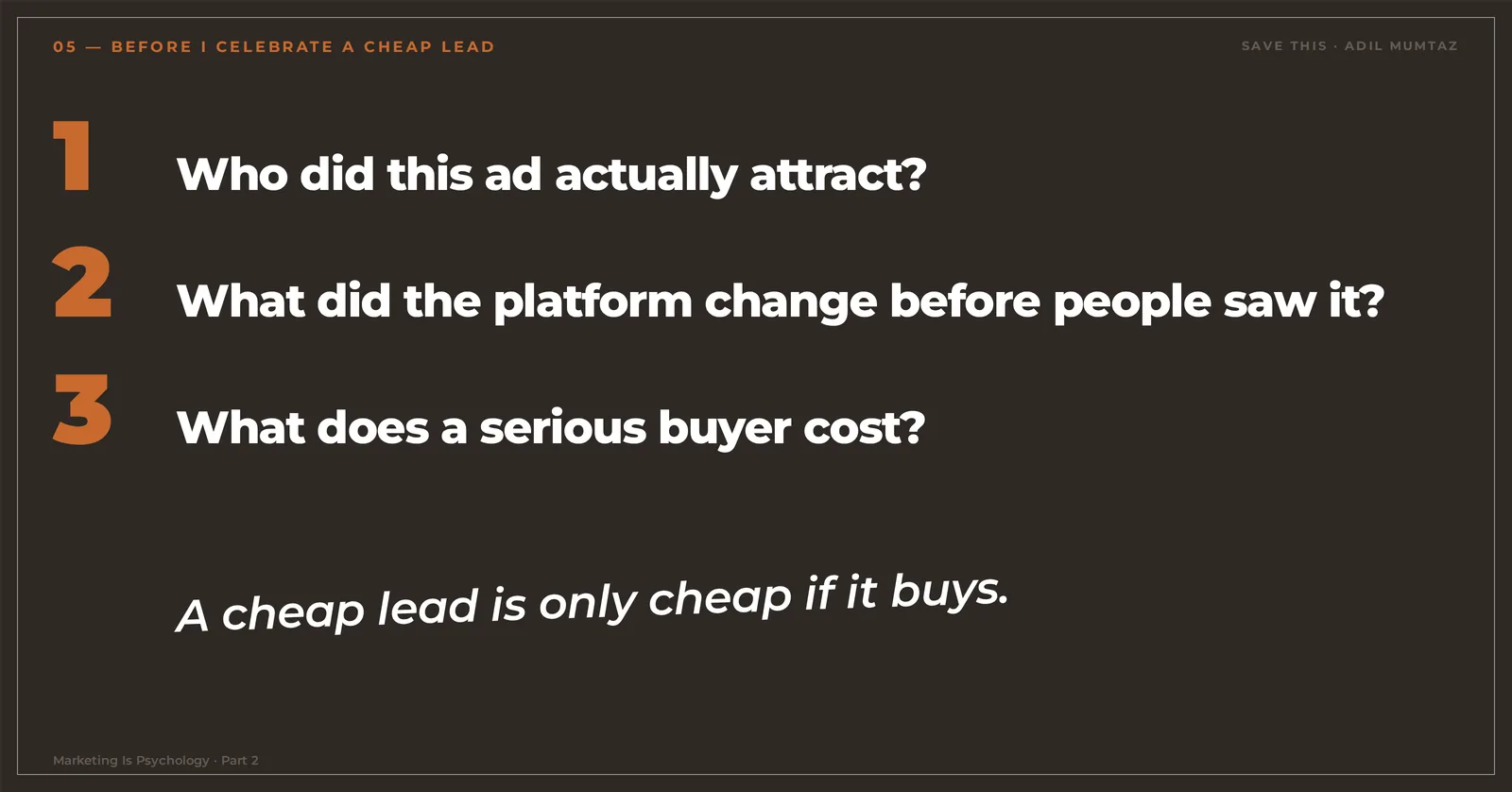
- Who did this ad actually attract?
- What did the platform change before people saw it?
- What does a serious buyer cost?
Part 3 is about storytelling: how a sales team’s objection became a script in Urdu, and what I’d write differently next time.
Is your cheapest ad your best one?
Send me the ad and the numbers. I’ll tell you who it’s really attracting, and what a serious buyer is costing you.
Questions people ask
Why are my Facebook leads low quality?
Usually because the ad attracts the easiest people to reach, not the likeliest to buy. Meta optimises for the result you ask for, such as a chat or a form, and the cheapest people to get that result from are often browsers. What the ad promises decides who replies.
Are cheap leads from Meta ads bad?
Not always. At Tameer the cheapest ad of all was about trust, at about Rs 25 a chat, and it brought serious buyers. A cheap lead is only bad when it’s cheap because the ad spoke to the wrong person. Judge it by cost per serious buyer, not cost per lead.
Should I turn off Advantage+ creative enhancements?
Check what people actually see before you trust the numbers. Enhancements that change the image, add templates or rewrite text can change what the ad means. In this case they turned a blinds ad into something that looked like a spa ad. Switch off the ones that change the picture or the words.
I’m Adil Mumtaz, a creative strategist for paid social. I find the question under the ad, then I make the ad. My case studies, with the real ads and numbers, are here.